
Every screen quote involves a mesh decision, and it is usually presented as a single choice for the whole enclosure. That framing is wrong. Different walls of the same cage face different problems, and matching mesh to the specific problem on each wall is both cheaper and better than picking one grade and using it uniformly.
Standard 18×14 charcoal fiberglass
Eighteen strands per inch one way, fourteen the other, in charcoal. This is the default on the large majority of Florida pool cages and it deserves to be. It stops mosquitoes and flies, keeps the view and the airflow, and costs the least per panel. In Tampa it lasts five to eight years, shorter on the sun-facing walls.
Charcoal rather than grey or silver matters more than people expect. Darker mesh is dramatically easier to see through from the inside, because it absorbs rather than scatters light. Silver mesh looks brighter from outside and turns your view into a haze from within.
No-see-um 20×20
A tighter square weave that closes the gaps midges and sand gnats come through. If you are getting bitten inside your own enclosure on a still evening, standard 18×14 is the reason and this is the fix.
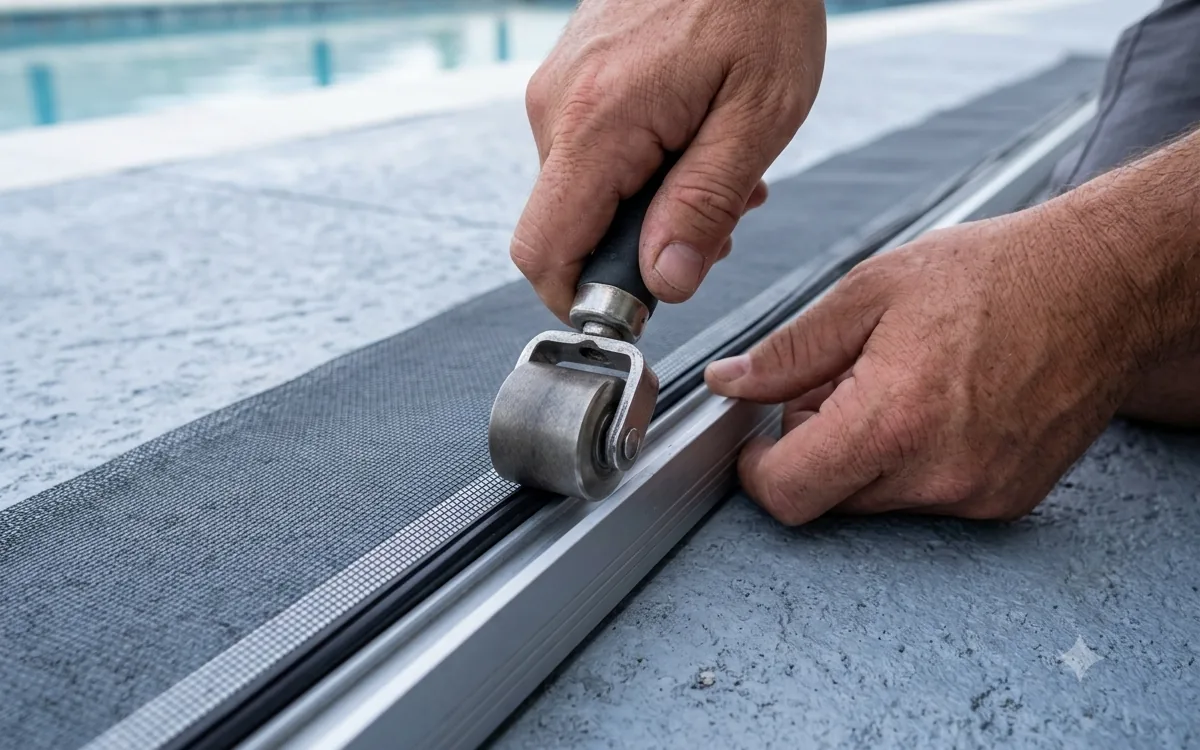
The trade-off is real: noticeably reduced airflow and slightly reduced visibility. Which is why installing it across an entire cage is usually a mistake. Put it on the walls facing the water, the wetland or the tree line where the insects are coming from, and keep standard mesh elsewhere so the enclosure still breathes. On waterfront property in Apollo Beach or wooded lots in New Tampa, this combination is close to standard.
Pet-resistant vinyl-coated polyester
Roughly seven times the tear strength of fiberglass, with an eight to twelve year lifespan rather than five to eight. It holds up to scratching, leaning and paw pressure. It will not stop a large dog running at it full speed, and any company telling you otherwise is overselling.
This is the mesh most commonly bought in the wrong quantity. Pet damage happens in a predictable band: the bottom two to three feet of panels and the area around the door. Screening only that band in pet mesh typically cuts the upgrade cost by more than half while covering essentially all the actual risk. Full coverage makes sense only for cats, whose claw damage appears wherever they can reach.
Florida Glass (vinyl-backed screen)
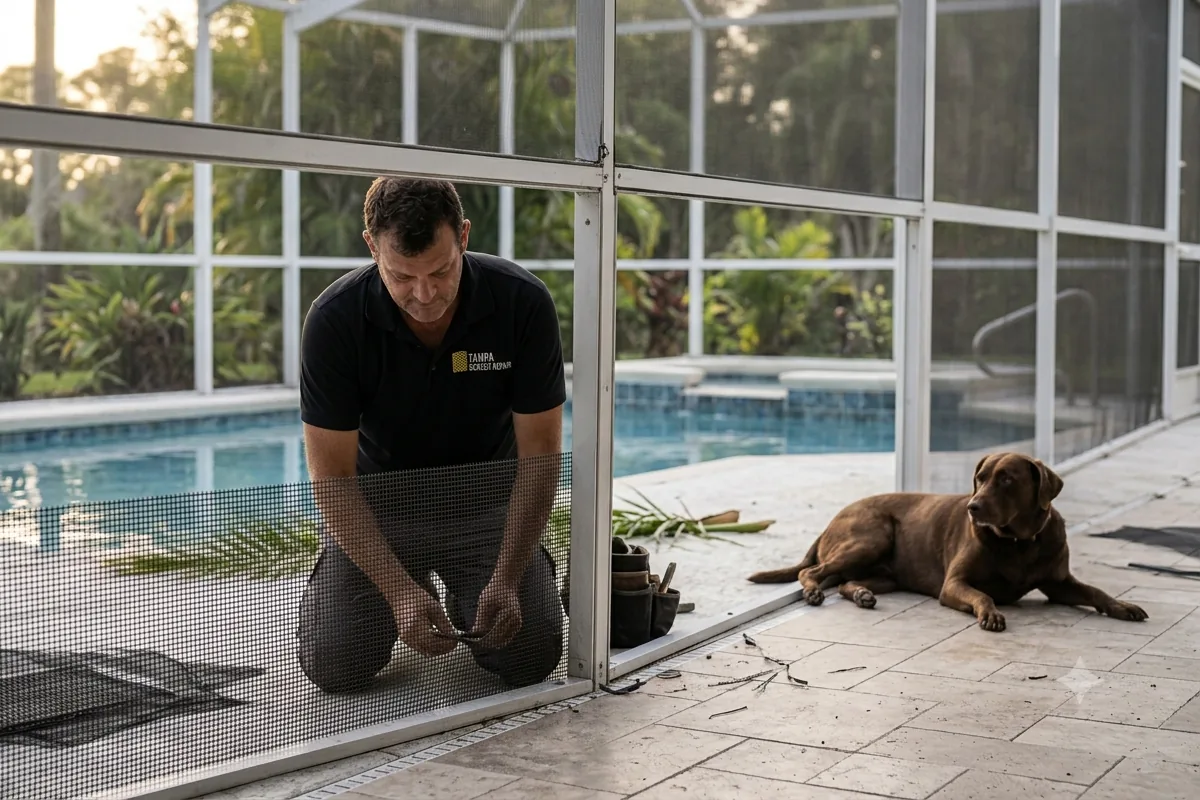
Screen laminated to clear vinyl. No airflow, no insects, no splash, no debris. It is not really a screen so much as a transparent panel that happens to be built on screen.
Two places it belongs. First, the kick plate row along the bottom of an enclosure, where pool splash, foot traffic and pet pressure do their damage and where blocking the view at ankle height costs you nothing. Second, the one wall that catches wind-driven rain, which turns an unusable lanai into a usable one during summer storms. Anywhere above deck level on the other three walls, it is the wrong product.
A comparison table
| Item | Detail |
|---|---|
| Standard 18×14 fiberglass | 5–8 yrs · excellent airflow · lowest cost |
| No-see-um 20×20 | 5–8 yrs · moderate airflow · blocks midges |
| Pet-resistant polyester | 8–12 yrs · good airflow · ~7× tear strength |
| Florida Glass | 10+ yrs · no airflow · blocks water and debris |
What we would actually specify
For a typical unshaded Tampa pool cage with a dog: standard 18×14 charcoal on the upper panels of all walls, pet-resistant polyester on the bottom two rows and around the door, and Florida Glass on the kick plate row if splash is a real problem. For waterfront in South Tampa or Apollo Beach, swap the water-facing walls to no-see-um and specify stainless fasteners while the panels are out.
That combination costs meaningfully less than doing the whole cage in the most expensive option, and it performs better because each wall gets the mesh suited to its actual problem. Pricing for each grade is on our pool cage rescreening page, and the interactive mesh selector on the homepage shows the weave densities at close range.