
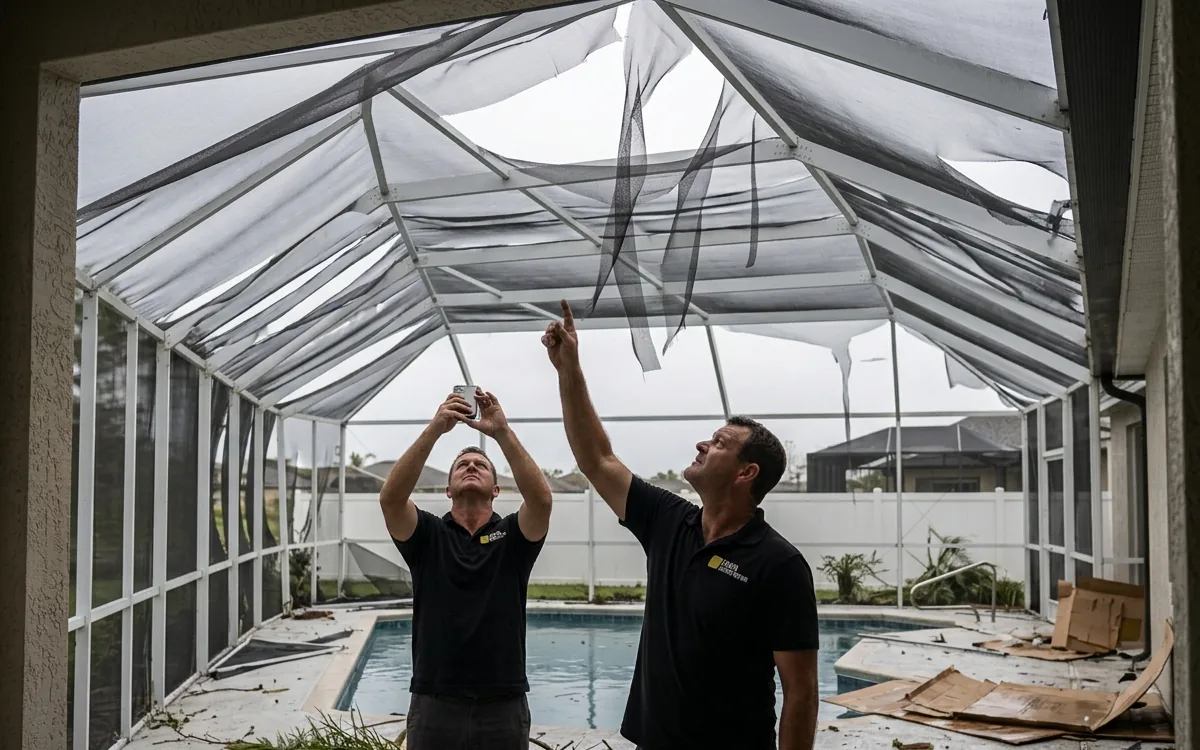
Screen enclosures are engineered to fail in a specific order. Mesh releases first, relieving wind load before that force transfers into the beams, the anchors, and ultimately your roofline. A cage that lost six panels in a named storm did exactly what it was designed to do, and it very likely saved you a far more expensive repair.
Before the storm: what actually matters
Clear everything out of the enclosure
This is the single highest-value thing you can do, and most people underestimate it. A patio chair inside a screen cage becomes a projectile in eighty-mile-an-hour wind, and it destroys panels from the inside where the mesh has no give. Furniture, planters, umbrellas, pool toys, side tables, grills — all of it either goes inside the house or into the pool, which sounds strange but is standard practice in Florida for exactly this reason.
Check anchors and hardware while the weather is calm
Anchors are what resist wind uplift. Corroded or pulled anchors are the difference between a cage that survives a storm and one that departs the property. This is not a thing to assess with a storm three days out — it is a thing to have looked at in April. Re-anchoring runs $110 to $340 depending on how many points need attention, which is trivial against the cost of a destroyed enclosure. Our frame repair page covers what we check.
Trim what overhangs the cage
Falling limbs are the most common single cause of screen damage in storms, well ahead of wind alone. Anything above the enclosure that could come down in high wind should come down beforehand on your terms.
What not to do
- Do not remove screen panels preemptively. People do this thinking they are reducing wind load. The mesh is the designed failure point — removing it does not help the structure and leaves you paying to reinstall panels that would have survived.
- Do not board or tarp the enclosure. Solid surfaces catch wind. A tarped screen cage is a sail, and that transfers enormous load into framing designed for the opposite.
- Do not drain the pool. Water weight helps hold the deck structure, and an empty pool can float or shift in saturated ground. This is well-established Florida guidance.
- Do not brace panels with lumber. It concentrates load at the bracing points and usually causes more frame damage than the wind would have.
After the storm: order of operations
1. Make it safe, then stop
Secure anything dangerous and keep people and pets away from compromised structure. Then stop, and specifically do not clean up.
2. Photograph everything before touching it
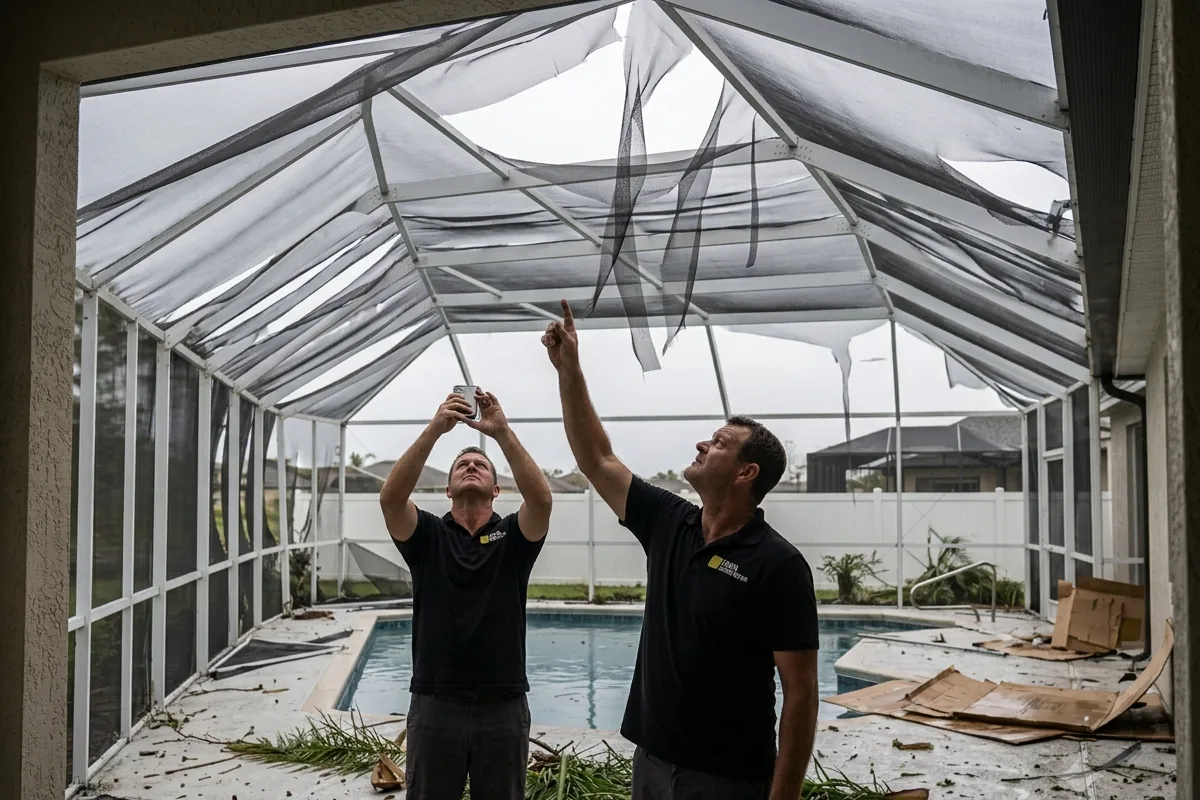
This is the most expensive mistake homeowners make. Tearing out hanging mesh and hauling away debris before documentation destroys the evidence of what happened, and adjusters are entitled to be sceptical about damage they cannot see. Take wide establishing shots of every elevation, close-ups of every damaged panel, and close-ups of every point of frame damage. Photograph the debris where it landed.
3. Understand your policy before you call
Many Florida carriers treat screen enclosures separately from the dwelling, with their own deductible and their own limits. Read the declarations page for pool cage or screen enclosure language before you assume you are covered, and before you assume you are not.
4. Triage structure before cosmetics
Bent uprights, shifted beams and pulled anchors affect whether the cage survives the next storm and are the part insurance most often covers. Open panels that let debris and animals into a pool come second. Purely cosmetic mesh replacement is genuinely last, even though it is the most visible. Our storm damage repair page walks through the pricing for each category.
A note on scheduling honesty
After a named storm every screen company in Hillsborough is oversubscribed and lead times stretch. We triage by severity rather than call order, so a fully compromised enclosure gets seen before a single torn panel regardless of who rang first. Calling early gets you into the queue at the right position, and we will give you a realistic date rather than an optimistic one.